


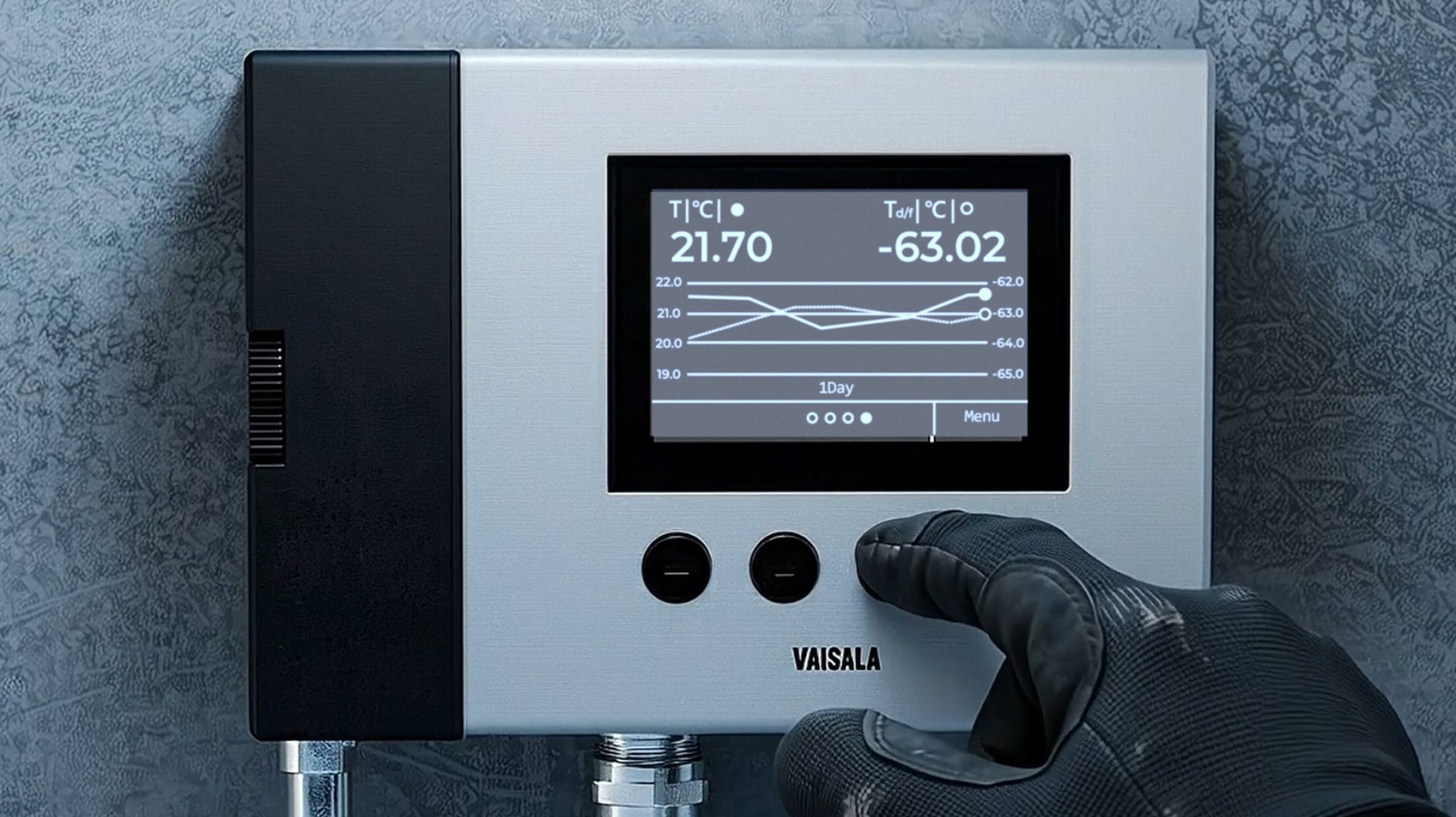
Vaisala recently introduced (mid-Sept. 2026) its new DMP370 Series Intrinsically Safe Dew Point Probes for the HMT370EX Series Intrinsically Safe Humidity and Temperature Transmitters, bringing its proven DRYCAP® dew point measurement technology to hazardous locations where combustible gases or dust may be present.
The new DMP370 Probes, together with the HMT370EX Transmitters, are designed for continuous moisture and dew point measurement in applications including hydrogen production, biomethane and natural gas infrastructure, chemical processing, industrial gas systems, and other environments where safety is an important consideration.
For facilities working with hydrogen, renewable gases, and other demanding industrial processes, reliable moisture measurement can play an important role in maintaining gas quality, protecting equipment, and monitoring process conditions.
Evaluating moisture measurement for hydrogen, biomethane, natural gas, compressed gases, or another hazardous application?
Thermo/Cense can help review your process conditions and identify an appropriate Vaisala measurement solution. Contact us to discuss your dew point range, process pressure, gas, installation requirements, and hazardous-area classification.
Why Dew Point Measurement Matters
Even very small amounts of water vapor can matter in dry-gas applications.
Depending on the process, excessive moisture may contribute to corrosion, affect product or gas quality, interfere with downstream equipment, or indicate that a drying or purification process is not operating as expected. This makes continuous dew point measurement valuable anywhere maintaining a specified moisture level is critical to process performance.
Hydrogen production is one example. As hydrogen production, storage, and distribution systems expand, operators need dependable ways to monitor gas quality throughout the process. Similar measurement requirements exist in biomethane production, natural gas pipelines, compressed gases, chemical processing, and other industrial applications.
The challenge is that many of these measurements must be made in locations where flammable gases or combustible dust may be present.
The new DMP370 Series Probes and HMT370EX Transmitter were developed specifically for these environments.
The Vaisala DMP370 Series Intrinsically Safe Dew Point Probes and HMT370EX Intrinsically Safe Humidity and Temperature Transmitters can respond up to 20 times faster than conventional aluminum oxide sensor technology and recovers quickly following exposure to higher moisture levels.
“Intrinsically safe” measurement for hazardous locations
The combined Vaisala DMP370 Probe and HMT370EX Transmitter are a certified “intrinsically safe” measurement system, defined as a protection method that limits the electrical energy available in the instrument so it cannot become an ignition source under specified hazardous-location conditions.
The Probes and Transmitter are certified for:
- ATEX and IECEx applications up to Zone 0 / Zone 20
- FM approved for Class I, II and III, Division 1 locations in the United States and Canada.
Users should, of course, verify the specific certification, area classification, installation requirements, and probe configuration for their application.
Continuous measurement with DRYCAP sensor technology
At the heart of the system is Vaisala's DRYCAP dew point sensor technology.
One of the system’s goals is to provide continuous measurement without periodic gaps caused by sensor regeneration or heating cycles. Vaisala has also incorporated a drift-compensation mechanism intended to support long-term measurement stability.
Response time can be particularly important when process moisture changes quickly. The new Probe and Transmitter can respond up to 20 times faster than conventional aluminum oxide sensor technology and recover quickly following exposure to higher moisture levels.
That combination can help operators identify changes in process conditions sooner rather than discovering a moisture problem after the fact.
Broad industrial applications beyond hydrogen
Although hydrogen production and storage are important target applications, the new instrument is intended for a considerably broader range of processes. These include:
- Electrolyzer output monitoring
- Natural gas and biomethane systems
- Biogas upgrading
- Pipeline monitoring
- Synthetic fuel production and storage (such as eSAF)
- Methanol production and storage
- Chemical processing
- Pharmaceutical manufacturing
- Electronics manufacturing
- Compressed air and nitrogen systems
- Oil and gas manufacturing
- Dry-process battery manufacturing (for certain environments where combustible carbon dust creates a hazardous area measurement requirement)
This breadth makes the new instrument particularly useful for facilities that need both low dew point measurement and hazardous-location certification.
Selecting the right dew point instrument
Dew point measurement is highly application dependent. The lowest expected dew point is only one factor to consider. Other factors include:
- Process pressure
- Gas composition
- Operating temperature
- Installation method
- Response-time requirements
- Hazardous-area classification
- Output signal
- Access for calibration or service
All can affect the appropriate instrument and probe configuration.
# # #
Thermo/Cense offers a broad range of Vaisala humidity, temperature, and dew point measurement instruments for both general industrial and demanding process applications.
Let the experts at Thermo/Cense help identify the best measurement solution for your process conditions. Get in touch to discuss your dew point range, process pressure, gas, installation requirements, and hazardous-area classification.


